St. Mary Catholic Parish v. Roy: What Families Need to Know
When it comes to kids, it’s simple: No child should be excluded or made to feel like there’s something wrong with them because of who they are or what their family looks like.
But St. Mary, a Catholic preschool in Colorado, wants to do just that — while still taking taxpayer money as part of Colorado’s universal preschool program. And now, they’ve taken their case to the Supreme Court.
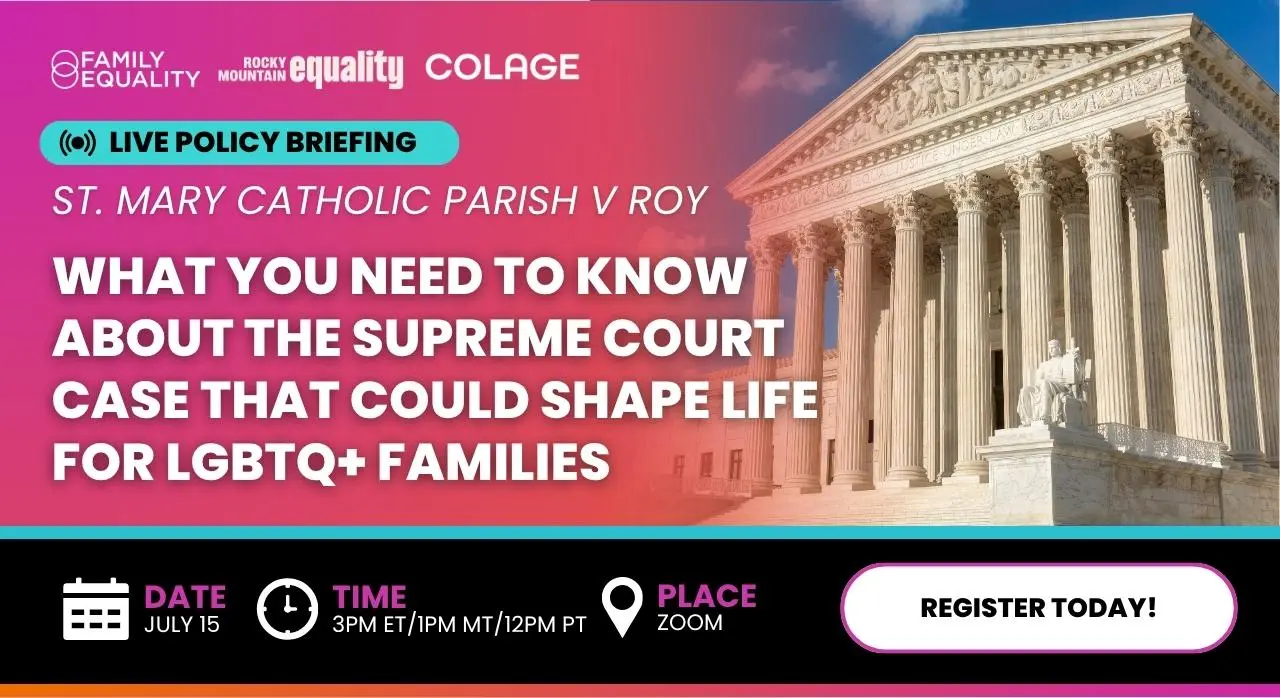
What does this mean for LGBTQ+ families? To answer this question and more, Family Equality sat down with Meg York, Chief Legal and Policy Officer at COLAGE, Mardi Moore, CEO of Rocky Mountain Equality, and our very own Nikhil Vashee, Senior Director of Education Law and Policy.
About St. Mary v. Roy
In 2022, Colorado established a universal preschool program to ensure that all children in the state can access early childhood education no matter what. The program provides public funding for voluntary, universal preschool and requires participating schools to sign a nondiscrimination agreement that mandates equal enrollment opportunities to all families.
St. Mary argues that it’s being forced to opt out of this program because it will not comply with the nondiscrimination agreement. The school — and petitioners St. Bernadette, a few parents, and the archdiocese of Denver — claim that the state’s refusal to exempt them from these rules is religious discrimination in violation of the First Amendment.
When this case made it to the Tenth Circuit, the court rejected the preschool’s argument. According to that decision, Colorado’s conditions for participating in the program are neutral and generally applied to every preschool — regardless of religion.
St. Mary is now asking the Supreme Court to reverse that decision.
What’s at stake in this case
Dignity and belonging
This case asks whether a provider participating in a public program can turn away families because of who they are. If the Court chooses to sanction such discrimination, then four year olds will be forced to wonder what they or their family has done wrong to be kept out of a community that everyone else is welcomed into. Imagine the weight of that experience on a young person’s mind — particularly for the many young people whose first experiences with communities outside of their immediate families is preschool.
For LGBTQ+ children, even those who cannot yet name their own identity, this exclusion sends a signal that they are not accepted. For LGBTQ+ families who are people of faith — longtime church members eager to share their faith with their children through a religious education, for example — this exclusion strips them of a community that has been central to their lives.
But the dignitary harm posed by such discrimination isn’t all we must grapple with in this case.
Access to services
Colorado’s universal preschool program was developed to ensure that all families have access to a preschool education — a resource that has had a demonstrable impact on a child’s healthy development. But in many communities, especially rural ones, there may be only one or two providers participating in this program.
If the Court decides that St. Mary can turn away families because of who they are, that could prevent LGBTQ+ parents and kids living in these communities from accessing a preschool altogether. In this event, their rights to these services — which they are entitled to and are paying taxes to support — are effectively taken away.
Other nondiscrimination requirements
What’s more, the Supreme Court’s decision could affect how other courts evaluate additional nondiscrimination requirements. A lot of public services are administered through religious institutions, and they might use this decision to challenge anti-discrimination protections in areas like healthcare and housing.
Imagine an LGBTQ+ family whose child needs medical care. If the only healthcare provider they can access under their public benefits is a religious provider, they might not be able to get the care they need, even if the law says otherwise.
There are so many Americans who rely on public benefits to feed their children or keep a roof over their heads. So what’s at stake here is whether families and vulnerable people in this country can rely on the services that are meant for them, or whether their access to everyday necessities will depend on who they are, where they live, and whether the person serving them thinks they belong.
How can you help?
Here’s the good news: Experts in the movement are working hard to protect families like yours in this case and beyond — and you can help. Often, when headlines like this one come up on our news feeds, it can feel like we have no option but to sit back and hope that someone with more power, more knowledge, or a louder voice can make a difference.
This time, though, your story has real, concrete power to change the tide. Family Equality, Rocky Mountain Equality, and COLAGE are seeking stories from families to illustrate the real-world impact of a potential ruling.
Here’s what we’re looking for:
- Stories about exclusion. Have you ever been turned away from a religious or educational space because of your family? Discouraged? Afraid?
- Stories about belonging. Are there times that your family felt affirmed in a religious and educational space? How did that feel, and what positive impacts did it have on your family’s life or well-being?
We welcome stories from any person in any state, but especially:
- LGBTQ+ parents
- Children with LGBTQ+ parents
- Grandparents
- People of faith
- Neighbors
- Allies
If you don’t think you have a story to share…share anyway! We will work with storytellers to determine whether your story is a good fit.

We know this works!
During the height of the fight for marriage equality, we submitted briefs to the courts, penned op-eds, and got out our metaphorical megaphone to share with stories from families like yours. Dozens of children with LGBTQ+ parents shared how their experiences in a family that couldn’t get married impacted their life growing up.
Our brief was actually mentioned by the Supreme Court Justices during the case that struck down DOMA and in the decision to grant marriage equality nationwide.

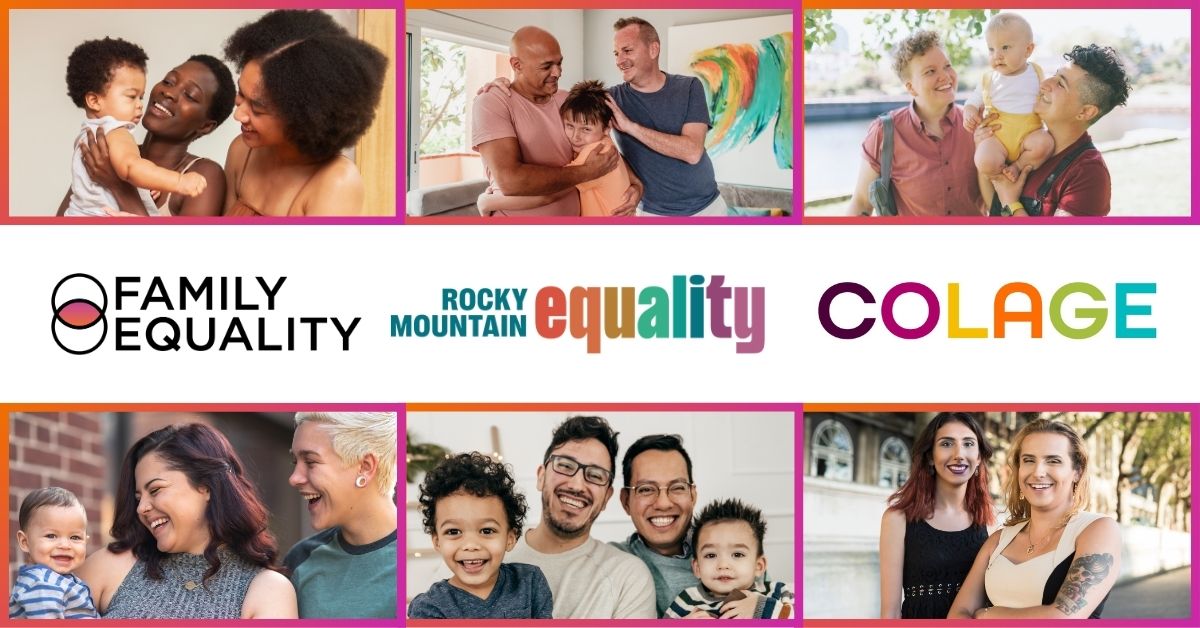
Share your story to protect LGBTQ+ families in Colorado!
As this case heads to the highest court in the nation, the stories of families like yours help people understand what’s at stake — and can even shape what happens next.
Fill out our form to share your story with Family Equality, COLAGE, and Rocky Mountain Equality.