Virtual peer support groups for LGBTQ+ families
They say it takes a village to raise a family — and they aren’t kidding! Navigating the joys and challenges of parenthood, especially as an LGBTQ+ person, requires community, connection, and support. Family Equality’s virtual peer support groups allow you to connect with other parents and parents-to-be, learning from their experiences and sharing your own wisdom. Check out our upcoming meetings, explore fabulous offerings from our movement partners, and RSVP today!
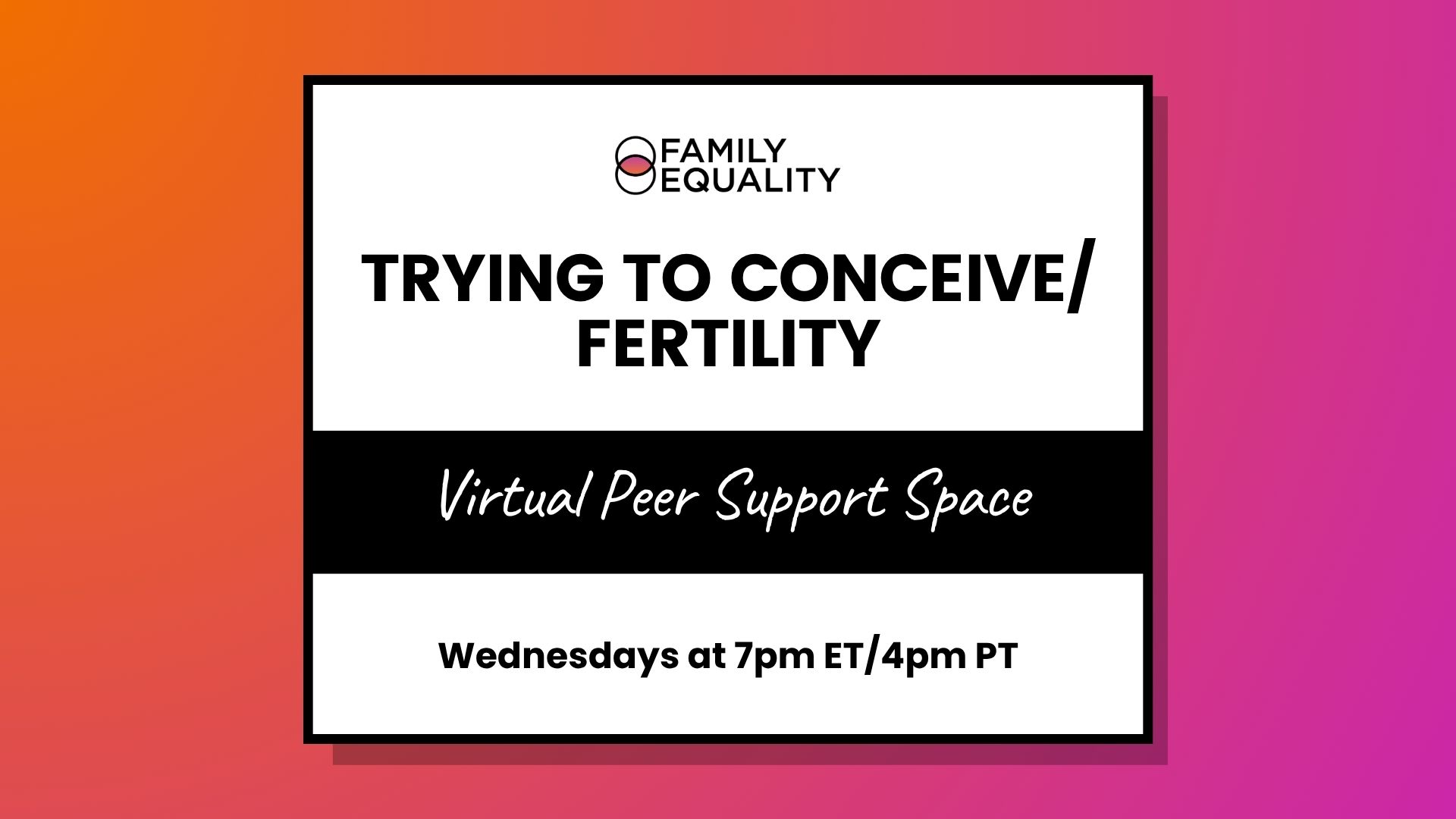
Trying to conceive/fertility peer support group
On your fertility journey and looking for support? Join us and the LGBTQ+ Perinatal Wellness Center for this biweekly peer-run support space for anyone under the LGBTQ+ rainbow who are working to create children to grow their families.
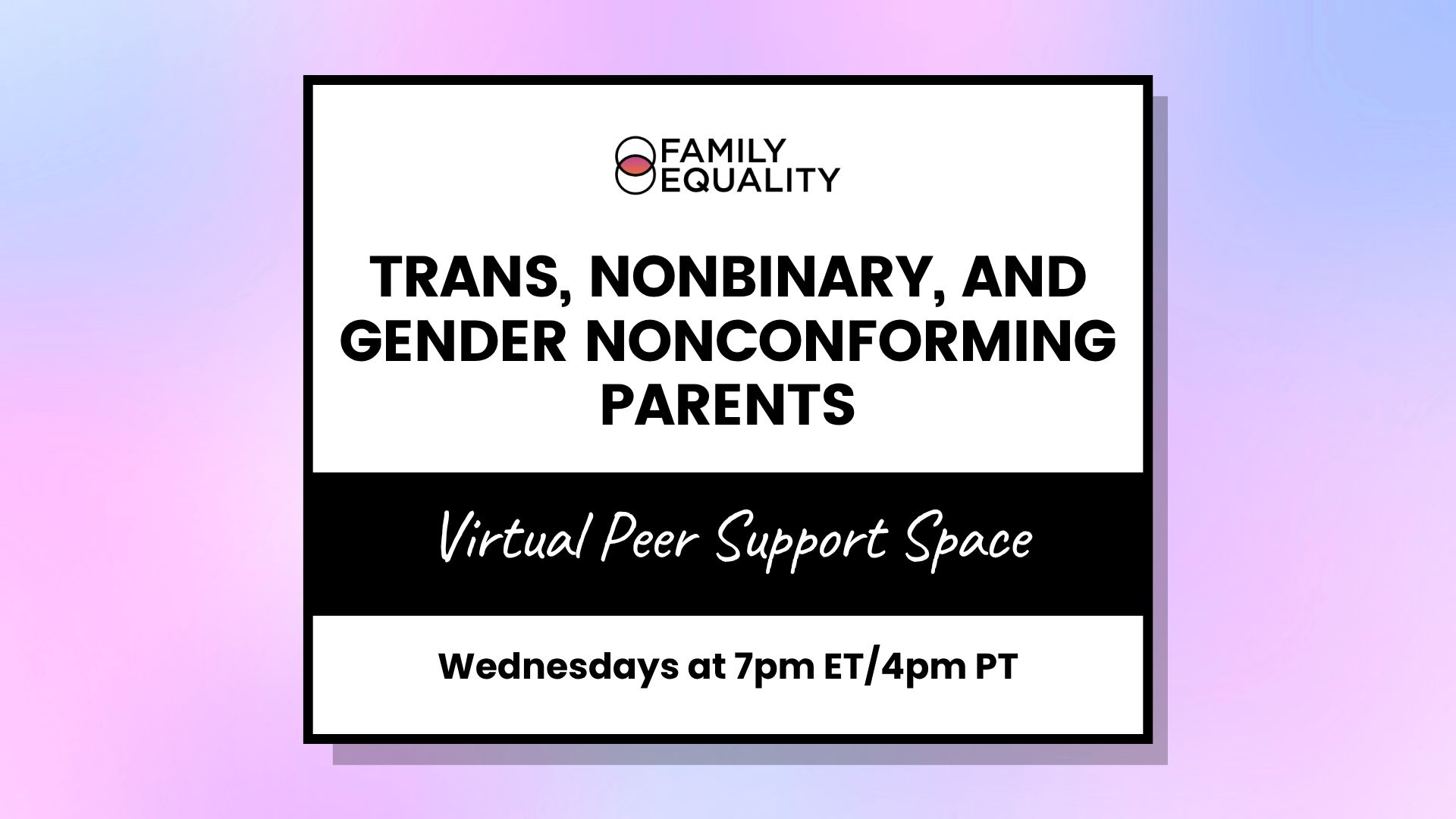
Trans, nonbinary, and gender nonconforming parents peer support space
Are you a trans, nonbinary, or gender nonconforming parent? Join us for our biweekly peer-run support space for any parent or caregiver who identifies as transgender, nonbinary, gender nonconforming, or anywhere on the genderqueer spectrum.
Partner resources
Check out these other support groups from our amazing partners!
Results
Trans Youth and Their Family Peer Group
Our Family Coalition
This group is for transgender and gender non-conforming (TGNC) youth and their parents to be in community with one another and access support, learning, and empathy. Trans youth will be on one breakout room while caregivers chat in a separate virtual space.
Prospective and Expectant Parent Peer Group
Our Family Coalition
This group is for LGBTQ+ folks who are thinking about or in the process of building their family.
LGBTQ+ Parents Beyond Biology
Our Family Coalition
This group is for LGBTQ+ parents and caregivers who are non-biological and/or non-gestational to provide support on their path — navigating legal recognition, building bonds in ways others may not understand, responding to assumptions about what makes a “real” parent, and finding your place in systems that often center biology or pregnancy.