Advocating for Inclusive Schools: How did we get here?

School can be an overwhelming place for any student. There are tests to take, friends to make, and rules to follow. But LGBTQ+ families must face the added weight of navigating school systems amid a rise in anti-LGBTQ+ hostility.
In recent years, we’ve witnessed the evolution of laws and policies that seek to censor LGBTQ+ families and topics from the classroom. Whether you’re in an inclusive school or are eager to foster more inclusivity at school, parents, educators, and students alike have many avenues of advocacy to create positive change.
Review the resource below to better understand the landscape of LGBTQ+ inclusivity in schools, what paths you can take to advocate in school settings, and how to craft effective messaging to create change.
What is the state of LGBTQ+ inclusion in the classroom?
From COVID-19 denial to banning books
Attempts to erase or prohibit LGBTQ+ parents, families, history, and topics from the classroom are nothing new. But in 2020, the COVID-19 epidemic and the concurrent uprisings following the murder of George Floyd reignited a national focus on schools, race, and censorship.
Specifically, groups targeted school boards to protest public health measures intended to protect people with vulnerable health conditions and then shifted their focus to censoring discussions of race and U.S. history from the classroom.
Over time, this evolved into efforts to censor the discussion of LGBTQ+ people, eventually leading to the banning of thousands of books from libraries and classrooms and the passage of laws like Florida’s now infamous “Don’t Say Gay or Trans” law.

Who is responsible for this change?
According to the American Library Association, 92% of all book challenges in 2025 were initiated by pressure groups and government officials. More specifically, PEN American found that there were only 11 people behind a majority of the 1,056 “book challenges.”
In other words, a tiny minority of extremists are acting with a megaphone, bolstering transphobia, sexism, racism, homophobia, and conspiracies under the guise of “parental rights.”
Types of anti-LGBTQ+ education laws

Understanding recent Supreme Court cases
To compound these matters, the Supreme Court recently delivered a series of opinions further shaping young people’s experiences in schools.
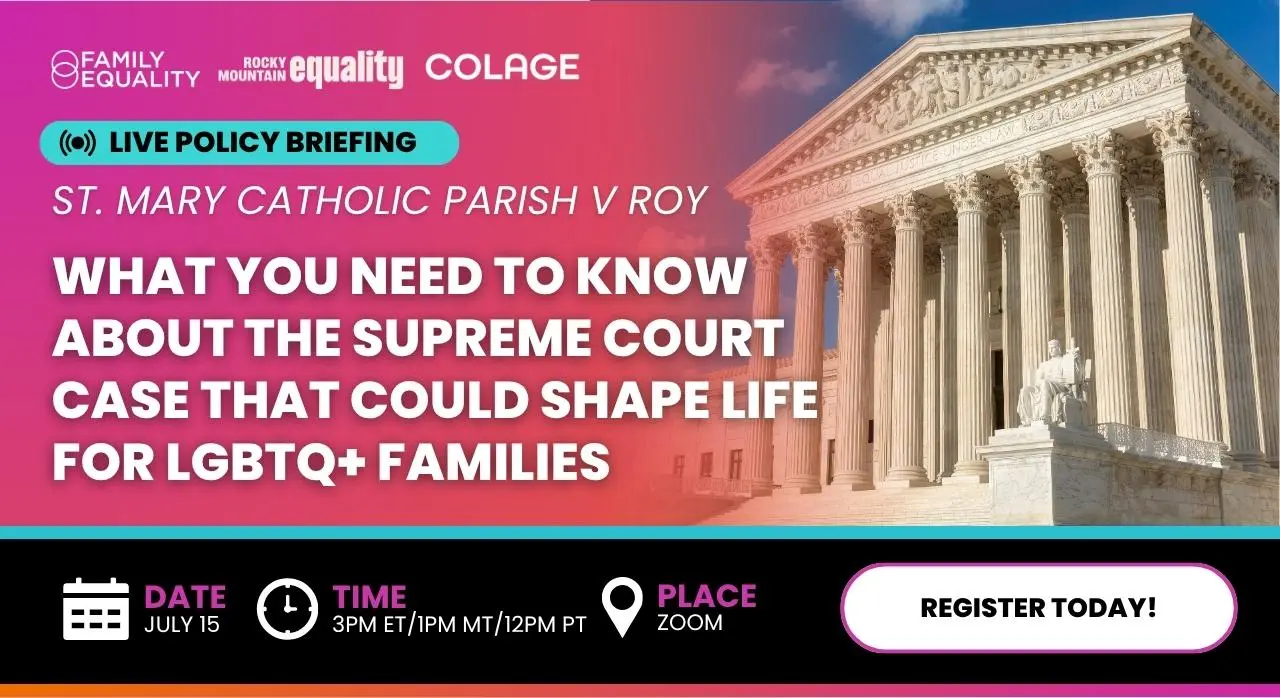
The Supreme Court required Montgomery County schools to provide religious opt-outs from certain instruction involving LGBTQ+-inclusive books. The decision did not ban LGBTQ+-inclusive curriculum or books.
This could result in:
- More opt-out requests from parents who object to LGBTQ+-inclusive content.
- More uncertainty for teachers and administrators about when an opt-out is required.
- Some schools may preemptively remove inclusive materials rather than navigate that uncertainty.
- Families, educators, and school boards will help determine whether inclusion remains part of the school experience.
The Supreme Court held that states may exclude transgender girls from girls’ school sports. The decision is specific to athletics; it does not create a general license to discriminate against transgender people in other areas of public life.
This could result in:
- More state-level restrictions on transgender students’ participation.
- More pressure on schools to police sex and gender in other parts of school life.
- A broader fight over belonging: Who gets to participate fully in school and who gets treated as an exception?
- A local choice: The Court said states may exclude transgender students from sports; it did not say schools and communities must adopt exclusionary policies.
Where do I start with my school advocacy?
It all begins with effective communication and preparation. Doing your research on the school and its existing policies, and then determining how and where to engage with school administrators to ensure they understand why this work is important is step one.
What should I say?
While there is a small, outspoken minority speaking out against inclusion in schools, the vast majority of Americans can agree on one simple truth: We all want our children to access high-quality, meaningful education.
Focusing on shared values like this is a good baseline to begin developing a plan for what you’ll say to school boards, educators, and administrations. As you move through these conversations, consider the following tips and tricks (adapted from We Make the Future Action’s framework for progressive victories) for organizing your thoughts, staying focused, and speaking with confidence.
Practice!
It might feel silly, but the best way to strengthen your storytelling work is to practice! Find a friend or family member and consider the scenario below:
Your local school board just created a policy removing LGBTQ+ books from the classroom. In the next five minutes, create a plan for how you would address this situation. Who would you reach out to, and how? What would you say?
Take 5 minutes to create a preliminary plan. Who are you reaching out to? How are you reaching out to them? What would you say?
Once you’re done, you and your friend can share your work plans and practice crafting talking points, providing pointers and troubleshooting obstacles along the way.


Sign up to become a Family Equality storyteller!
Our stories are powerful tools for creating change. At a time when school boards and politicians alike are seeking to silence LGBTQ+ families, Family Equality provides resources, connections, and opportunities to train and empower people like you to speak up in your local, state, and national communities.