Book Nook: LGBTQ+ Family Books Resource Hub

Introduction
We can all agree that reading is what? FUNdamental! Ensuring that your children have access to stories about the diversity of the world around them is key to fostering empathy, self-confidence, and critical thinking.
Despite this, a growing number of book bans have risen around the country targeting material about race, gender, and sexuality. In 2024, the American Library Association (ALA) tracked 821 attempts to censor library materials and services—affecting 2,452 unique titles. Even for those who live in areas unaffected by book bans, finding diverse books and working with school administrators to make them accessible can be its own challenge.
But as parents, educators, and community members, we have a unique opportunity to use our voice to protect our children’s freedom to read in and out of the classroom.
Support for every stage of advocacy
Diversifying your bookshelves
Looking for LGBTQ+ family book recommendations or resources to add affirming books to your shelves?
Advocating for your family
Get advice and resources for speaking out at library and school board meetings, contacting decision-makers and talking to the media.
Reporting censorship
If you’re already encountering book challenges, learn how you can report them.
Additional support
Find and connect with local resources and hotlines for more robust support.

Need to know info
Students spend more than 30 hours per week in school, so it’s especially important that we work to create classrooms that feel safe, affirming, and inclusive. The benefit of diverse storytelling is undebatable, with studies showing that the presence of diverse books in classroom libraries results in higher reading scores and higher cumulative classroom reading time. Creating classrooms that reflect students’ backgrounds and cultures helps all students see themselves reflected in their school work, fostering a sense of belonging and validation. But it also helps to expand a child’s worldview, teaching them empathy by introducing them to new cultures, challenges, and experiences.
Book bans are laws or policies brought by legislatures, school boards, or others with power over a student’s learning that mandate the removal of books from classrooms and libraries. Bans can include books that kids may bring from home to school. Sometimes, these policies aren’t complete bans, instead requiring parental permission or establishing an age restriction on certain titles. Learn more here.
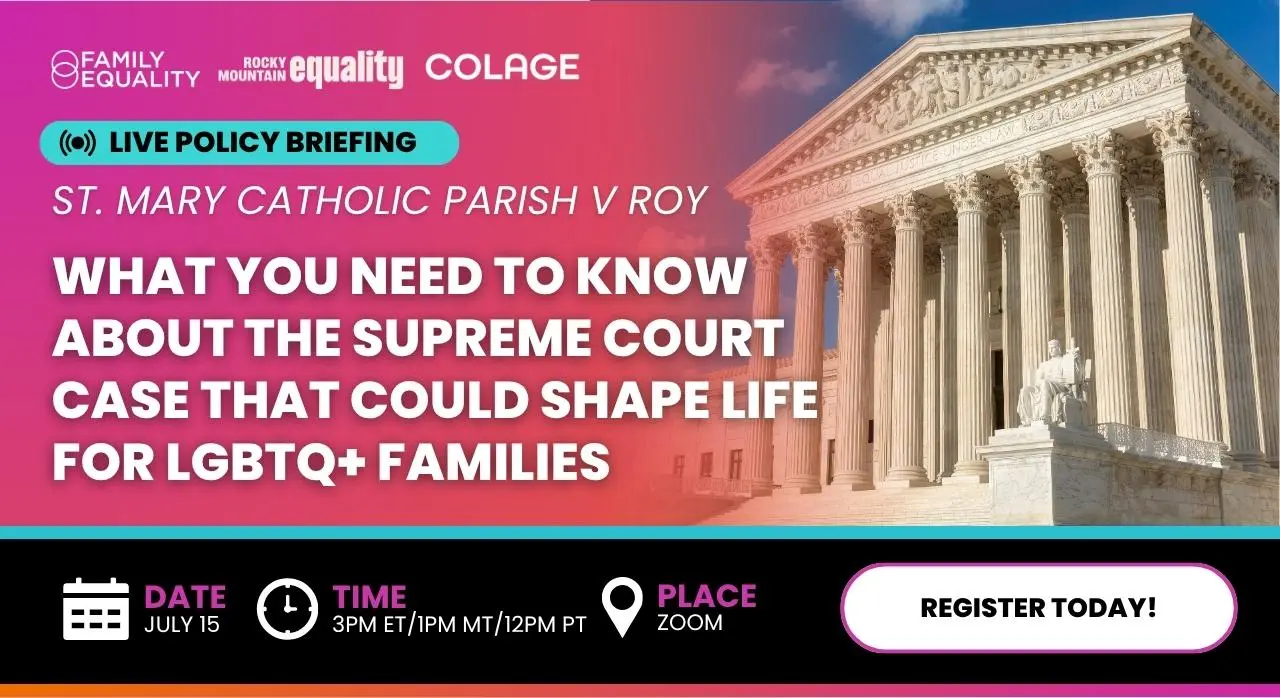
In the summer of 2025, the U.S. Supreme Court issued a 6-3 decision in Mahmoud v. Taylor, siding with parents seeking to opt their children out of classroom instruction that includes LGBTQ+-inclusive storybooks. The decision threatens decades of progress toward inclusive education and creates a dangerous precedent for carving out discrimination under the guise of religious freedom. Learn more about the case and how it impacts our work here.
Diversifying your bookshelves
The spectrum of LGBTQ+ inclusivity is wide and can range from maintaining an explicit anti-LGBTQ+ bias to incorporating LGBTQ+ related issues into everyday policies and curriculum. Assess your school’s policies, communications, and marketing materials to understand where your school falls.
Often, a school may lack LGBTQ+ curriculum simply because they don’t have the resources to start. That’s where you can come in!
LGBTQ+ family book recommendations
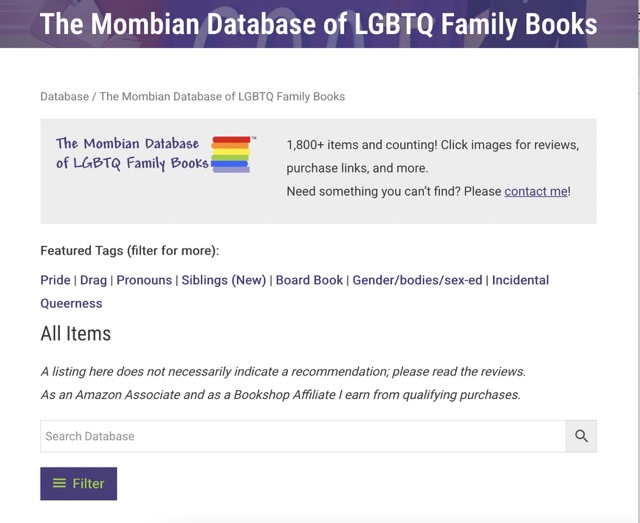
The LGBTQ+ parenting blog, and friend of Family Equality, Mombian hosts a database of LGBTQ+ Family Books with over 1,800 items (and counting!). The filterable database contains reviews, purchase links, and other helpful insights.
Adding LGBTQ+ affirming books to your classroom?
Our friends at GLSEN host “Rainbow Library,” a program that sends LGBTQ+ affirming K-12 text sets to schools across select states for free. To accompany this resource, they have a number of lesson plans you can share with educators.
Similarly, Open Books sends LGBTQ+ stories to school libraries across the United States. You can nominate any school in your area to receive books from Open Books anytime!
Accessing LGBTQ+ friendly books outside of the classroom
For whatever reason, you and your family might struggle to access LGBTQ+ friendly books from your local schools and libraries — even with the resources above. To help ensure that LGBTQ+ people have access to books and resources that represent their community, the Queer Liberation Library provides free library memberships and access to digital LGBTQ+ content no matter where you live.
Going beyond the bookshelf
Adding access to LGBTQ+ friendly books is just the first step to creating an LGBTQ+ friendly classroom. For more tips on the role you can play in creating safe, inclusive schools, check out our 3-part toolkit, “Advocating for Inclusive Schools.”
We also know that creating safe spaces in schools isn’t always possible — but that doesn’t mean our work should stop! Explore our resource on creating safe LGBTQ+ spaces in and out of the classroom, from “alt prom” to movie nights and everything in between.
Advocating for your family
We’ve talked about inclusivity in schools working on a spectrum. If you find yourself on the more explicitly anti-LGBTQ+ side of the spectrum, know this: the people pushing anti-LGBTQ+ policies and book bans forward are a small but vocal group. It’s up to us to counter those voices in school board meetings, state legislatures, city councils, and local media.
Just beginning your advocacy journey? Learn how to start the conversation and get all the fundamental advocacy tips with Family Equality.
Library and school board meetings
Change happens at every level and on every scale — starting with school and library board meetings. If your school or library board is considering challenging certain titles, review United Against Book Bans’ talking points, or their specific “Book Resumes” for bans on specific titles, and follow PFLAG’s guide to testifying at local board meetings today.
You can also take things a step further and be the change you want to see in the world by running for your local school board! CPD Action has a helpful toolkit with everything you need to know to run an effective campaign.
Contacting decision-makers
All elected officials, from school board members to state legislators, are elected to represent the voices of the people — aka you! This means you can, and should, reach out and advocate for the policies you want to see enacted in your school district.
To find your elected officials, use United Against Book Bans’ “Find Your Legislator” tool. As you talk to your elected official, you can use their talking points or the National Coalition Against Censorship’s (NCAC) template letters to school board members.
In the media
All elected officials, from school board members to state legislators, are elected to represent the voices of the people — aka you! This means you can, and should, reach out and advocate for the policies you want to see enacted in your school district.
To find your elected officials, use United Against Book Bans’ “Find Your Legislator” tool. As you talk to your elected official, you can use their talking points or the National Coalition Against Censorship’s (NCAC) template letters to school board members.


For educators
If you’re an educator looking for ways to push back against book challenges in your school or district, NCAC has a handbook for educators as well as a guide for school administrators.
Reporting censorship
If you’re already encountering book challenges in your district, you are not alone.
One of the simplest ways to help is to report book banning attempts to the American Library Association and United Against Book Bans.
Sometimes, book bans can violate your child’s legal rights by creating a hostile learning environment for them. That’s where Title IX—a law that prohibits sex-based discrimination in federally-funded schools—comes in. While we’ve seen a lot of changes under the Trump Administration, Title IX is still the law, and, as such, schools have certain obligations to fulfill under it. Our team put out an update on Title IX in early 2025 that might be helpful to read.
Additional support
If you’re looking for additional resources to help navigate the current school landscape, consider…
- Finding your state association of school librarians and reaching out to ask for support,
- Contacting NCAC’s Book Challenge Crisis Hotline.


Related resources
-
ResourceMarch 28, 2024
Advocating for Inclusive Schools: After Florida’s “Don’t Say Gay and Trans” Legislation
Learn More -
ResourceFebruary 8, 2024
Book Bans: How Parents Can Take Action
Learn More -
NewsJune 27, 2025
Family Equality Responds to Supreme Court Decision in Mahmoud. v. Taylor
Learn More