Tracking Your Cycle and Preparing for Trying to Get Pregnant
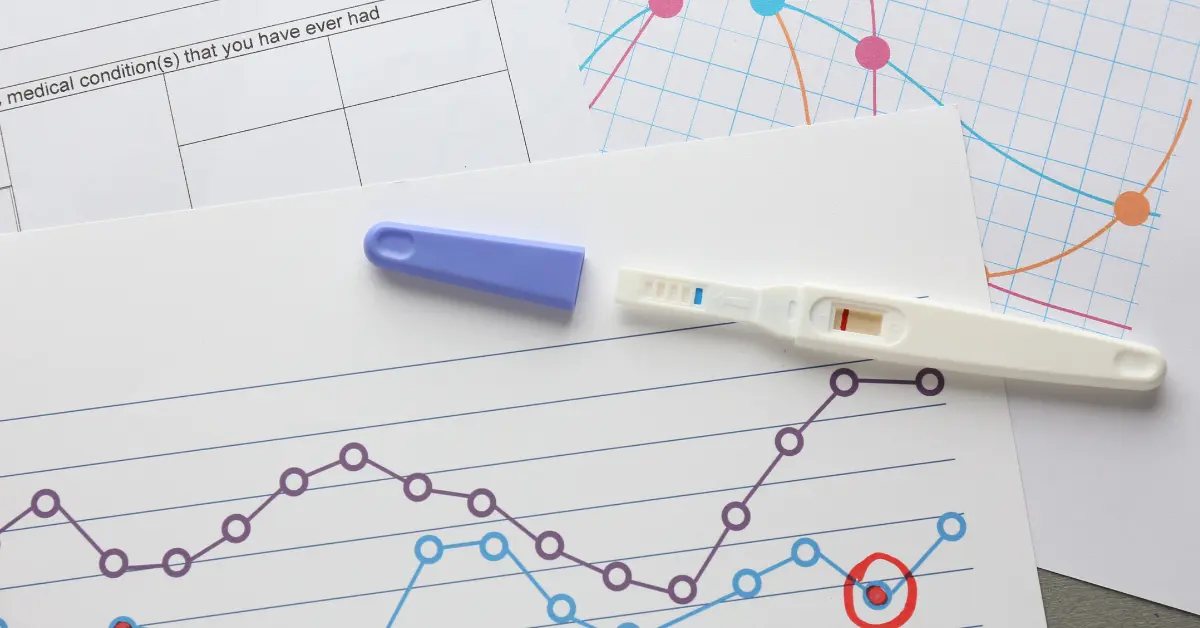
Thinking of trying to get pregnant? We talked to a trans and queer-centered fertility doula whose first piece of advice was: start tracking your cycle now!
Right now, so many LGBTQ+ families are exploring their options for conceiving and growing babies. In the giant tangle of confusing and cis/hetero-centered information out there, one of the hardest things to figure out is where to start. How do we go about preparing for the process of trying to conceive as LGBTQ+ families? As a trans and queer-centered fertility doula, my best advice is: start tracking your cycle now!
For those of us who don’t have access to sperm in the family—for whom sperm may have been stored or is limited in some capacity—tracking your cycle is especially important. Whether you’re purchasing sperm from a cryobank, getting sperm out of cryobank storage, arranging logistics with a known donor, or scheduling procedures with a midwife or reproductive endocrinologist, it’s important to time your insemination attempts accurately. By tracking your cycle data ahead of time, you can predict when ovulation will happen. This gives your sperm and eggs the best chance at being in the same place at the same time.

What is happening during a cycle?
The Follicular Phase
At the end of your period, your body goes into the “follicular phase.” This is when the eggs (inside of follicles within the ovary) mature and prepare for release. At the beginning of the follicular phase, follicle-stimulating hormone (FSH) starts to rise, causing an immature egg in the ovary to begin its maturation process inside of the follicle—a sort of bubble-like casing on the surface of the ovary. As the days wear on, estrogen levels gradually rise, causing the cervical mucus to go from dryer to creamier to wetter—making it possible for sperm to travel through the cervix and into the uterus & tubes as ovulation approaches. When estrogen rises to its peak, as the egg is reaching its fully mature state, Luteinizing hormone (LH) rises and eventually peaks, telling the body to release the egg from the follicle and into the fallopian tube where it may be fertilized (aka ovulation)! This egg will stay viable in the tubes for about 24-36 hours.
Luteal Phase
After ovulation, estrogen and follicle-stimulating hormone fall back to their baseline levels. The follicle that once housed the egg becomes the “corpus luteum,” ushering us into the “luteal phase.” During the luteal phase, the corpus luteum produces a rising level of progesterone. This causes the uterine lining to grow and become deep and soft—ready to receive a fertilized egg (aka zygote) if one occurs. If no implantation occurs over the next few days of the luteal phase, progesterone levels will fall. The uterine lining will shed, bringing us back to the start of the next follicular phase.
This is a lot of things happening in concert with each other inside your reproductive organs and endocrinological system! How can you know what’s going on when? And how can you determine when your egg is actually ready to be fertilized? Use this resource to establish an understanding of your own body’s rhythms and patterns. After gathering information for a few months, you will know when to time insemination to correspond with ovulation.
It’s important to remember throughout this process that everyone’s bodies are different. The goal of this practice isn’t to compare your cycle to anyone else’s. It’s to understand what is normal for you.

How can you start tracking your cycle?
One of the things we can track is our basal body temperature throughout a cycle. The basal body temperature is the temperature of your body at rest. In order to find your basal body temperature, take your temperature with a by-mouth thermometer when you wake up in the morning. It’s best to do this before you get up, take a drink of water, or really move around at all. To get the most accurate reading, take your temperature after you’ve been asleep for four or more hours.
Most people are surprised to find that their waking temperature is pretty consistent! Around 48 hours after ovulation, most people’s bodies will experience a 0.5 degree F rise in their basal body temperature. This data point is helpful for predicting ovulation in subsequent months.
There are a few ways that our cervixes give us information about where we’re at in our cycles. For a lot of people, the easiest change to see and track is the texture of our cervical mucus. Cervical mucus is the main component of what we usually know as genital discharge. For most people, it goes through a visible gradient of change over the course of the cycle. Starting from the time that your monthly bleed ends, your cervical mucus may be dry, sticky, or just not really present. As the ovaries work to mature an egg, it might become creamier, with a more lotion-y consistency. As the egg reaches maturity and prepares to be expelled into the fallopian tubes, cervical mucus will reach its wettest consistency. At this point, it will appear clear, lubey, and stretchy—almost like egg-white. This cervical mucus will allow sperm to reach and travel through the cervix, into the uterus and tubes.
Methods of Observation
There are a couple of ways to observe the texture of one’s cervical mucus throughout a cycle. You can check when you go to the bathroom by wiping with toilet paper before peeing. Note the sensation while wiping, and then look at the mucus on the toilet paper. You can also use your (clean) fingers to reach inside, touch your cervix, and observe the texture of the mucus on your fingers. Rub it between your fingers and watch how it stretches or breaks when you pull them apart. There’s no specific time of day that’s best for this, as long as you take note daily.
For most people, cervical mucus will become its stretchiest and lubiest just before or at the time ovulation occurs. So, this data point can help you predict subsequent months, and it can indicate when ovulation is close in the current month.
A few notes to consider:
- Cervical mucus is different from the genital wetness that occurs during sexual arousal.
- If you are unsure of which substance you’re looking at, you can submerge your cervical mucus-covered fingers into a glass of water. The substance that stays on your fingers and doesn’t dissipate into the water is your cervical mucus.
For folks who want to gather some bonus data, record the position and soft or hardness of the cervix daily.
One direct way we can know what our hormones are doing throughout the cycle is by testing for luteinizing hormone in our urine. Luteinizing hormone tests are relatively inexpensive and easy to use. This is especially true if you buy the most basic test strips and skip the frills of Ovulation Predictor Kits. When it seems like ovulation might be soon (based on your cervical mucus texture or predictions from your last bleed), start using LH test strips to monitor the escalation of your LH levels. You can test three times a day to observe how the line darkens over time. This is how you’ll know precisely when your LH level peaks.
Ovulation will happen around 24-36 hours after LH levels peak. So, while this piece of information is helpful for future prediction and for timing insemination in the current month.
What do we do with all of this information?
By tracking your cycle, you can predict when future ovulation may occur and better time your insemination attempts. When looking at all of this info together, you’ll see that that peak in your LH levels and your spike in basal body temperature will bookend the days in which your cervical mucus was stretchiest. That’s when your egg likely released from its follicle and into your fallopian tubes. As you continue tracking your cycle, you’ll see patterns in how many days after your period these events occurred. And, you’ll be able to more accurately predict how many days after a subsequent period may be the best time to plan insemination!
Helpful Apps & Tools
We’ve got many options for tracking your cycle over time. Some people prefer to record on paper charts (like this one from nonbinary midwife Kristin Kali at Maia Midwifery), and others prefer smartphone apps. While there is no fertility app truly built with LGBTQ+ families in mind, here are my suggestions (and their caveats):
Fertility Friend is old as hell and good at its job. Though it’s definitely not designed with LGBTQ+ parents in mind, its extremely beta web 2.0 vibe means that it’s devoid of the feminine kitch that a lot of fertility apps tend to bring to the design table. It’s all business, includes all the right categories for data collection, and uses a tried and true ovulation predictor algorithm.
Kindara is pretty neutrally designed and much more aesthetically pleasing than fertility friend. Its features for tracking insemination definitely assume you’re trying to get pregnant via PIV sex (with categories for protected, unprotected, and withdrawal). Though the website comes in guns blazing with “FOR WOMEN” language, the app itself doesn’t include a lot of gendered language. Also, Kindara can sync up with the company’s thermometer product—a little ring-shaped device that you can insert into your genitals. This allows you to send constant data about your body temperature to the app.
While Clue is one of the more gender-affirming cycle tracker apps, it’s not really intended for use as a fertility app. It’s great for storing info about your bleeding days and cycle symptoms. But, it isn’t structurally helpful for predicting ovulation and tracking the specific ovulation-related data points we’re interested in.
Where can I learn more and get support?
This is a lot of information! But starting to track your cycle and interpret the data can be a task that requires a little support. Many queer and trans birth workers (like me!) offer fertility support services to help guide you through this process! The Queer Doula Network Directory is a great way to find someone local to support you through your family-expanding journey. If you’re interested in working with me, you can always reach out using the contact form on my website!
I also want to shout out nonbinary midwife Refuge Midwifery’s “Beyond the Baster” class! This class first introduced me to the ins and outs of cycle tracking and charting. I couldn’t recommend more highly!
About Moss
Moss Froom is a nonbinary doula and childbirth educator living in Baltimore, MD. After witnessing the difficulty that families in their community experienced when seeking baseline trans and queer competent care and support on their family-building journeys, they dedicated themself to improving the perinatal experience for trans and queer people. Moss offers trans and queer-centered support services for people at all stages of their reproductive and family-building journeys, and teaches other birth workers how to provide support that’s affirming and celebratory of trans and queer families.


Looking for support on your LGBTQ+ pregnancy journey?
Family Equality hosts a virtual peer group every other Wednesday for any and all LGBTQ+ folks trying to conceive! Register today to receive log-in information.